


April 2026
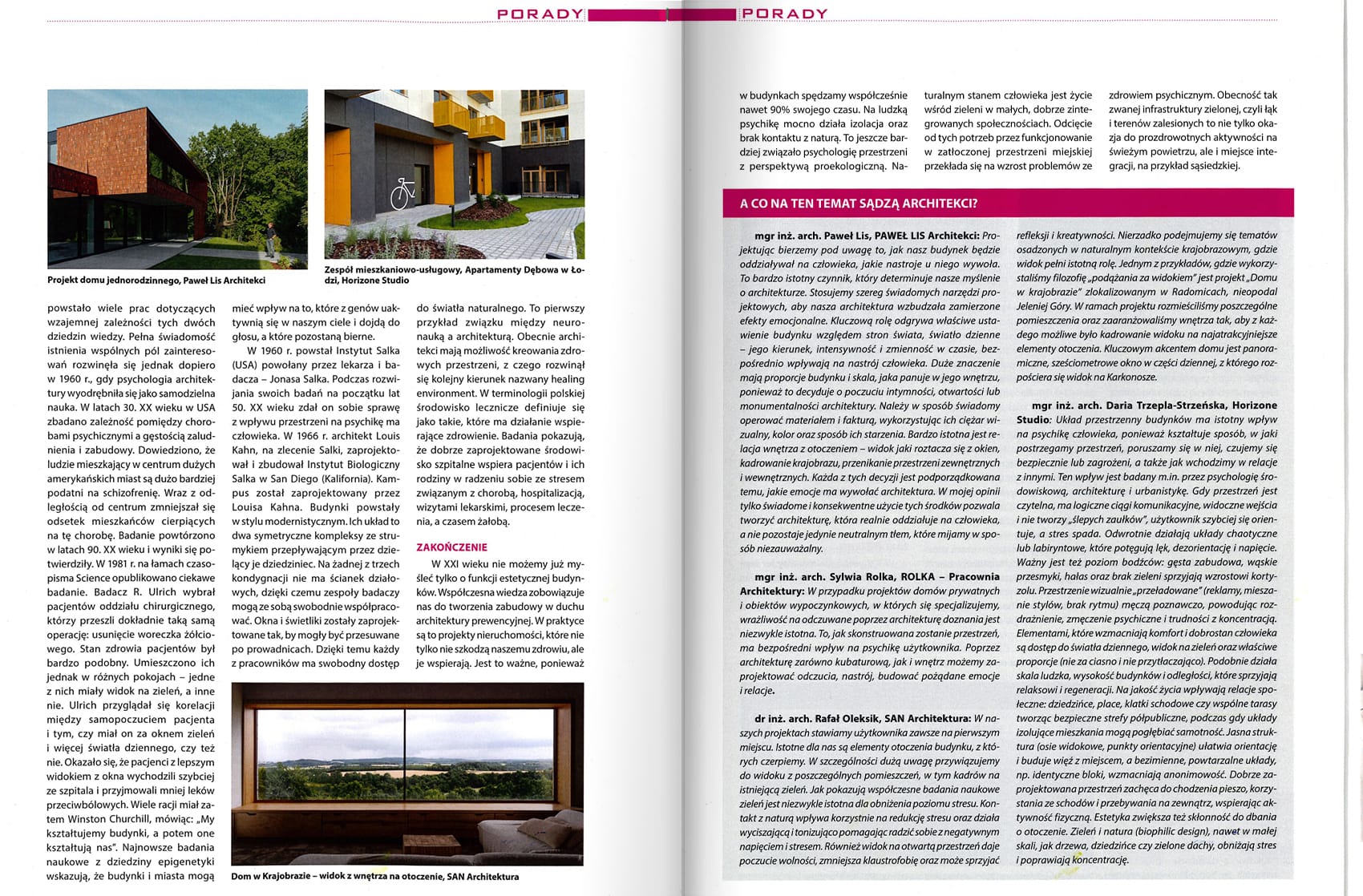
At the beginning of April, the latest issue of the quarterly “Wokół Płytek Ceramicznych” featured an article dedicated to neuroarchitecture. In the publication, Daria Trzepla-Strzeńska shares her insights on how architecture influences human well-being, from the legibility of spatial layouts, through access to daylight and greenery, to the importance of social relationships within designed environments.
At Horizone Studio, we believe that architecture is more than just form, it is a real tool that shapes quality of life. The spatial layout of buildings has a direct impact on our mental state. The way we perceive space, move through it, feel safe, and build relationships with others is closely linked to design decisions. These issues are explored in fields such as environmental psychology, architecture, and urban planning. Clear and legible spaces, with logical circulation paths and visible entrances, help users orient themselves quickly and reduce stress levels. In contrast, chaotic or maze-like layouts can cause disorientation, tension, and anxiety. The intensity of stimuli also plays a key role, excessive noise, dense development, and lack of greenery contribute to increased cortisol levels and cognitive overload. Mental comfort is enhanced by access to daylight, contact with nature, and well-balanced spatial proportions. Scale is equally important – building heights and distances designed with human proportions in mind promote relaxation and regeneration. Social relationships also play a significant role. Semi-public spaces such as courtyards, squares, staircases, and shared terraces encourage interaction and foster a sense of community. Conversely, layouts that isolate residents may deepen feelings of loneliness and alienation. A clear spatial structure, including visual axes and landmarks, improves orientation and strengthens the bond with a place. On the other hand, repetitive and anonymous layouts can intensify the feeling of unfamiliarity. Well-designed spaces also influence our behavior. They encourage physical activity, the use of shared areas, and care for the surroundings. Aesthetic quality and thoughtful design increase users’ sense of responsibility and agency. Greenery plays a particularly important role. Even small elements such as trees, courtyards, or green roofs reduce stress, improve concentration, and support mental regeneration. This approach, known as biophilic design, is becoming one of the key directions in contemporary architecture.
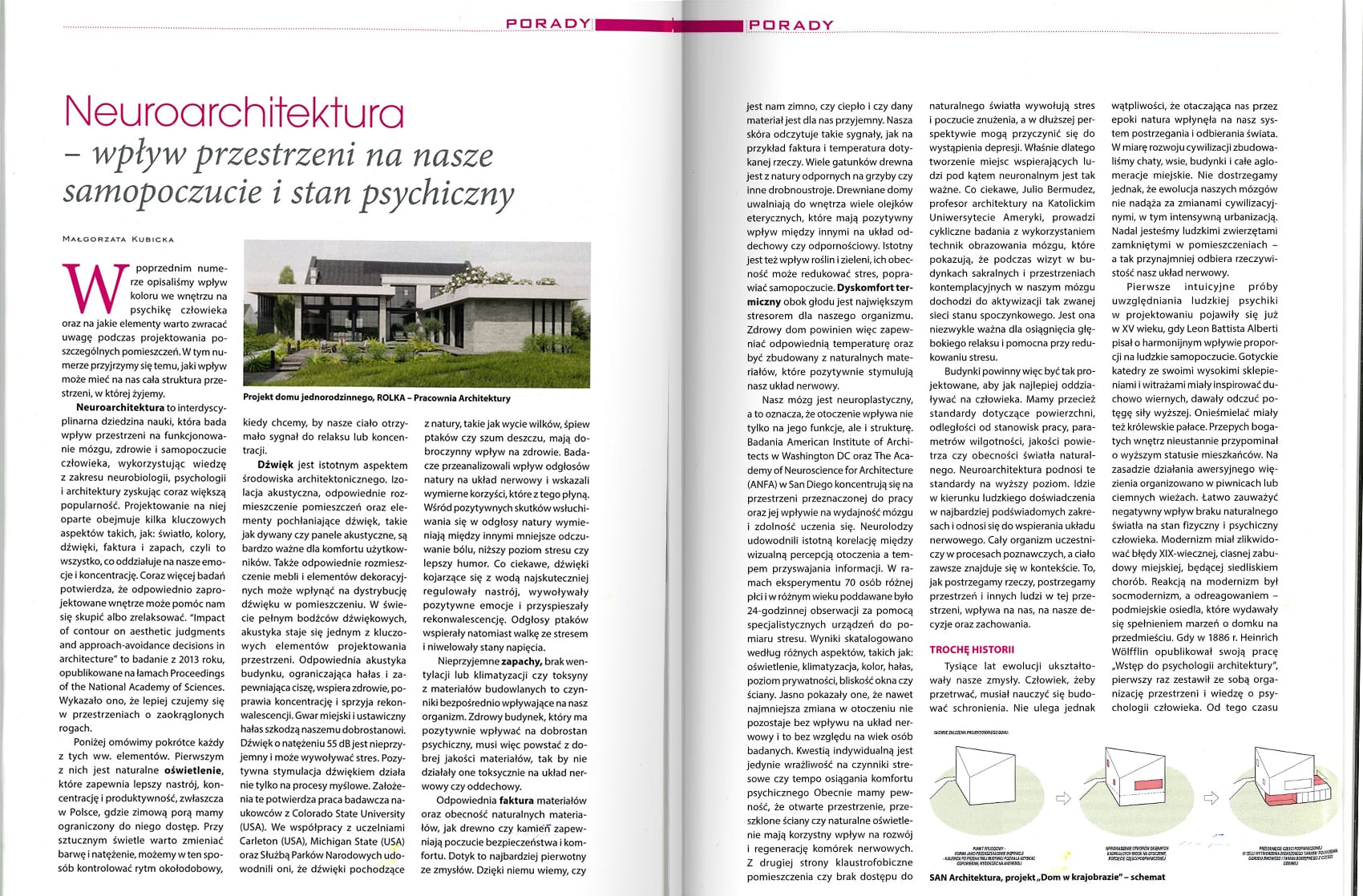
Key Areas of Spatial Impact
The spatial layout of buildings can support mental health, fostering a sense of safety, calm, and community, or weaken it, leading to stress, overload, and alienation.
That is why, at Horizone Studio, we treat design as a responsibility. We create spaces that not only look good, but above all, have a positive impact on people.