


In early April, we had the pleasure of meeting with students of Spatial Management at the Kraków University of Economics, who, under the supervision of Dr. Dorota Jopek, visited the Wesoła district of Kraków, one of the most unique and ambitious urban development projects in Poland.
Wesoła is a project of particular significance, an emerging creative district that combines the protection of historical heritage with a modern approach to urban design. For the students, this was a valuable opportunity to see how theory translates into real-world design processes.
During the meeting, Bartłomiej Kisielewski, architect and partner at Horizone Studio and coordinator of the Wesoła masterplan, introduced participants to the behind-the-scenes aspects of this complex project. He discussed the design process from the inside, the specifics of interdisciplinary teamwork, and the differences between a masterplan and a local plan. The discussion also covered key challenges of contemporary urban planning, integrated planning, participatory processes, and the need to reconcile the interests of various user groups. Particular emphasis was placed on creating spaces “for people” that are functional, realistic, and responsive to the real needs of residents.
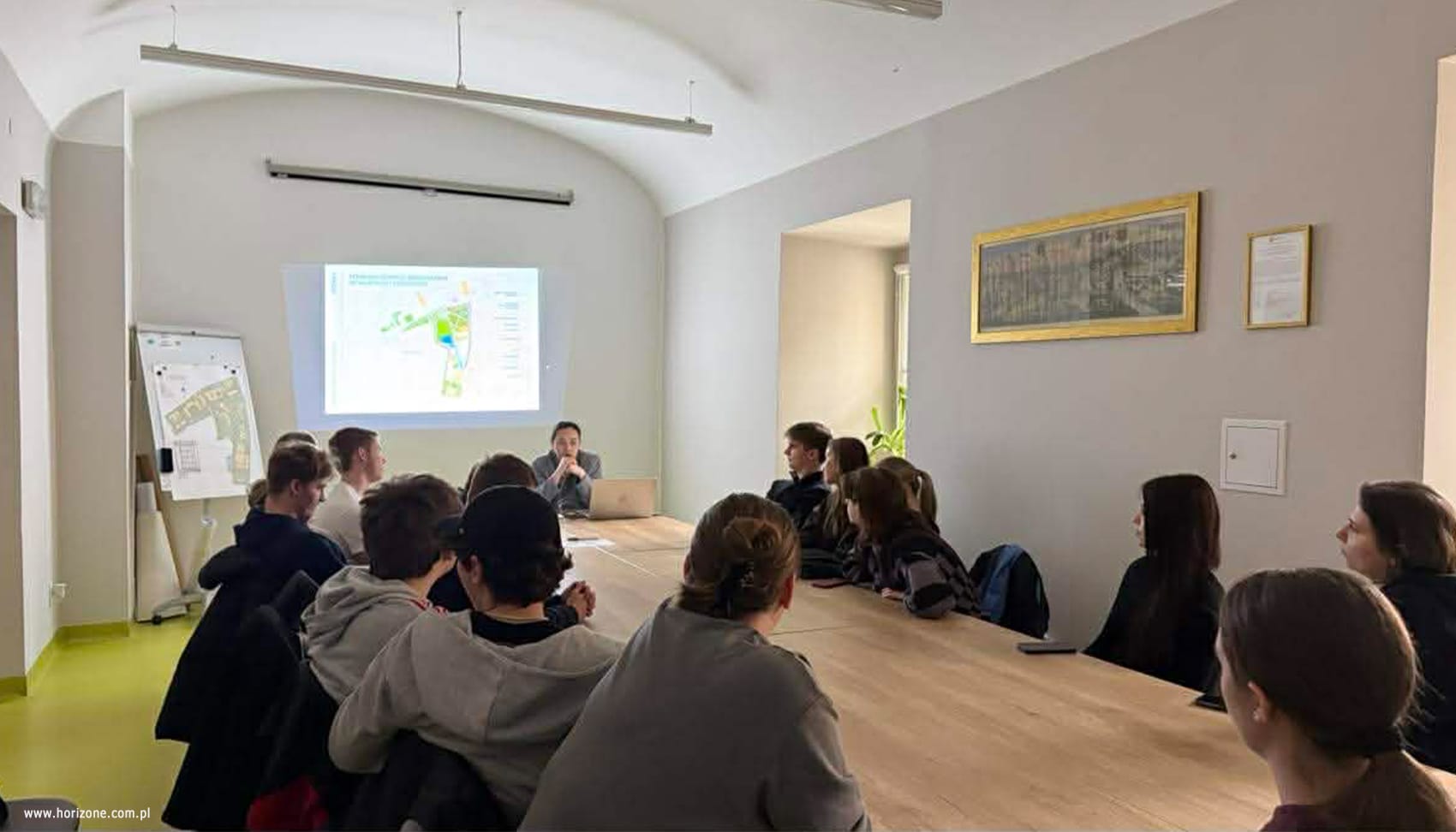
A key element of the meeting was also a discussion about the competencies required in the job market. We emphasized that contemporary urban planning goes beyond technical skills and requires a combination of analytical thinking and social sensitivity, knowledge of GIS tools and visualization methods, as well as the ability to work collaboratively, conduct public consultations, and understand investment processes.
A valuable addition was a conversation with Magdalena Ormanty from the Krakow City Development Agency, who presented the institutional and implementation perspectives of the project. Students learned about the management of such a complex undertaking and the role of well-trained specialists.
This meeting showcased urban planning in its full scope, as a field combining design, analytical, and communication skills. For the students, it was an opportunity to confront academic knowledge with practice, and for us, it was further proof that responsible design is also about education.
At Horizone Studio, we believe that sharing knowledge and experience is an integral part of our work. That’s why we are actively engaged in the development of future professionals and fostering a conscious approach to spatial design.
Thank you for the inspiring meeting.