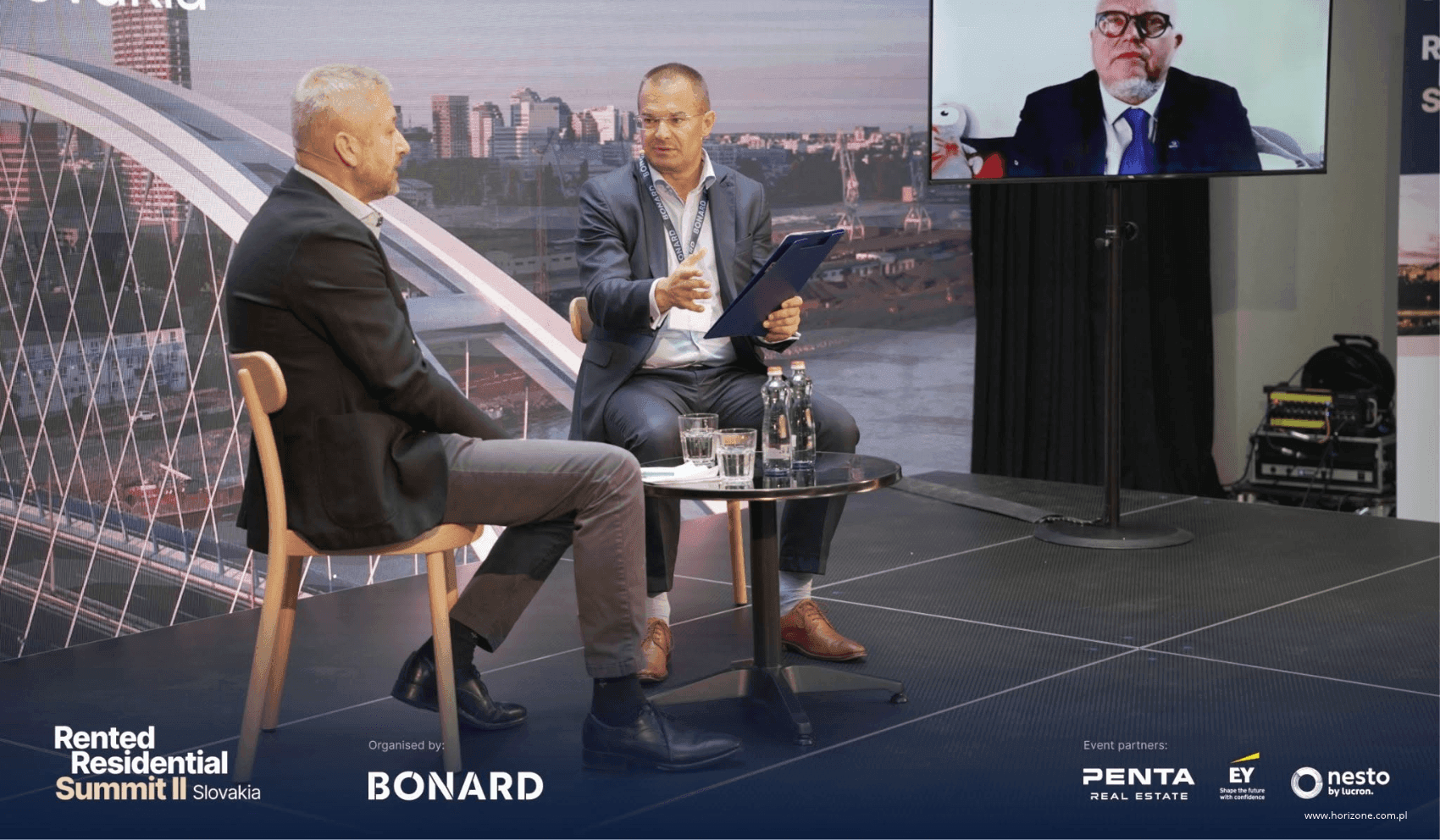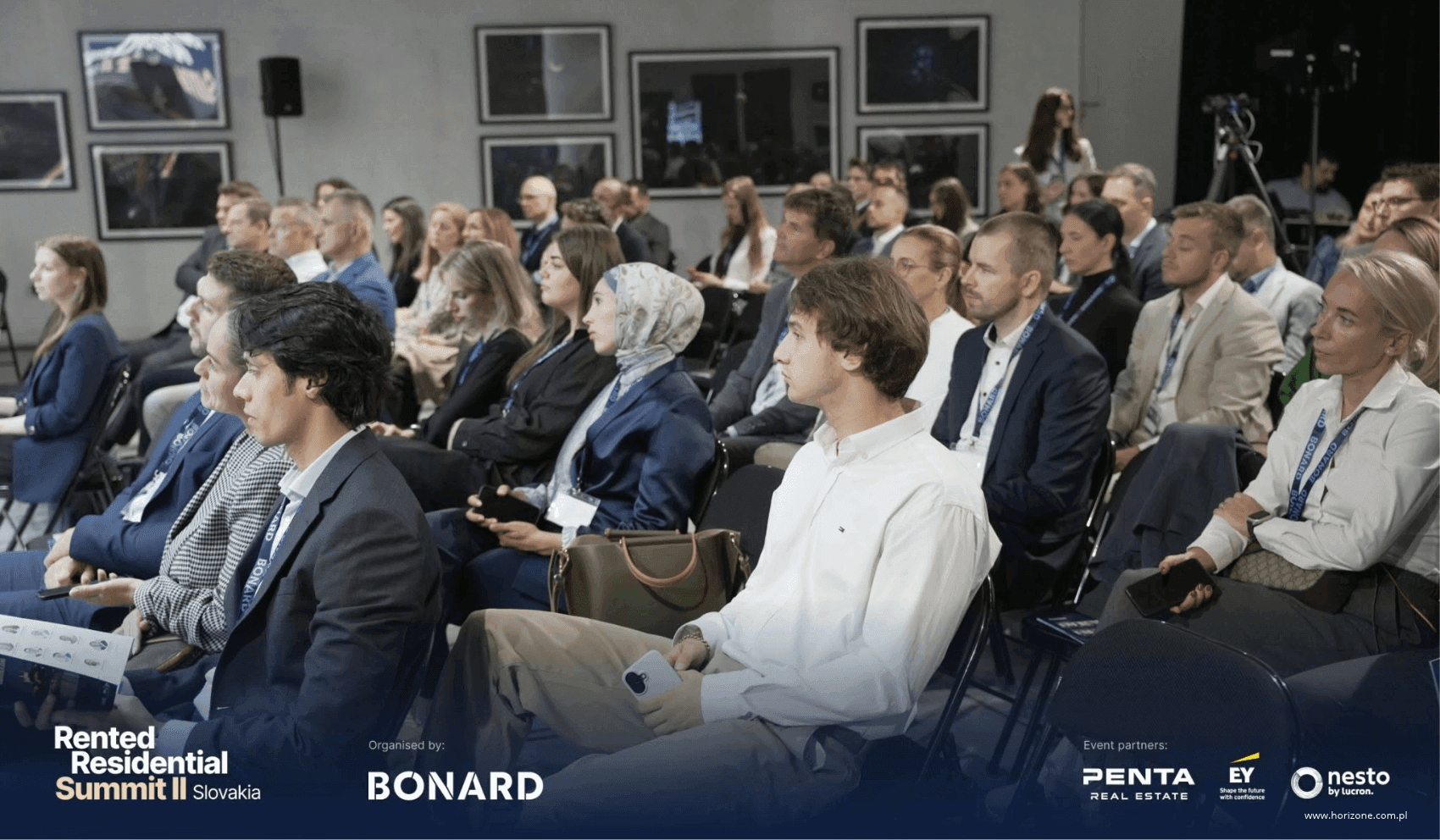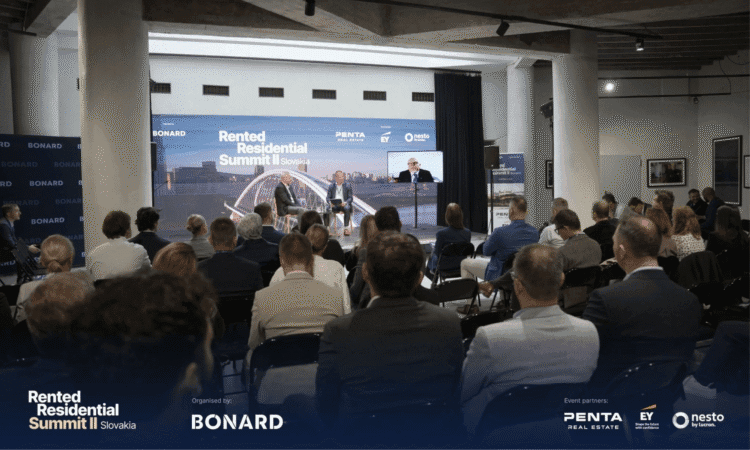



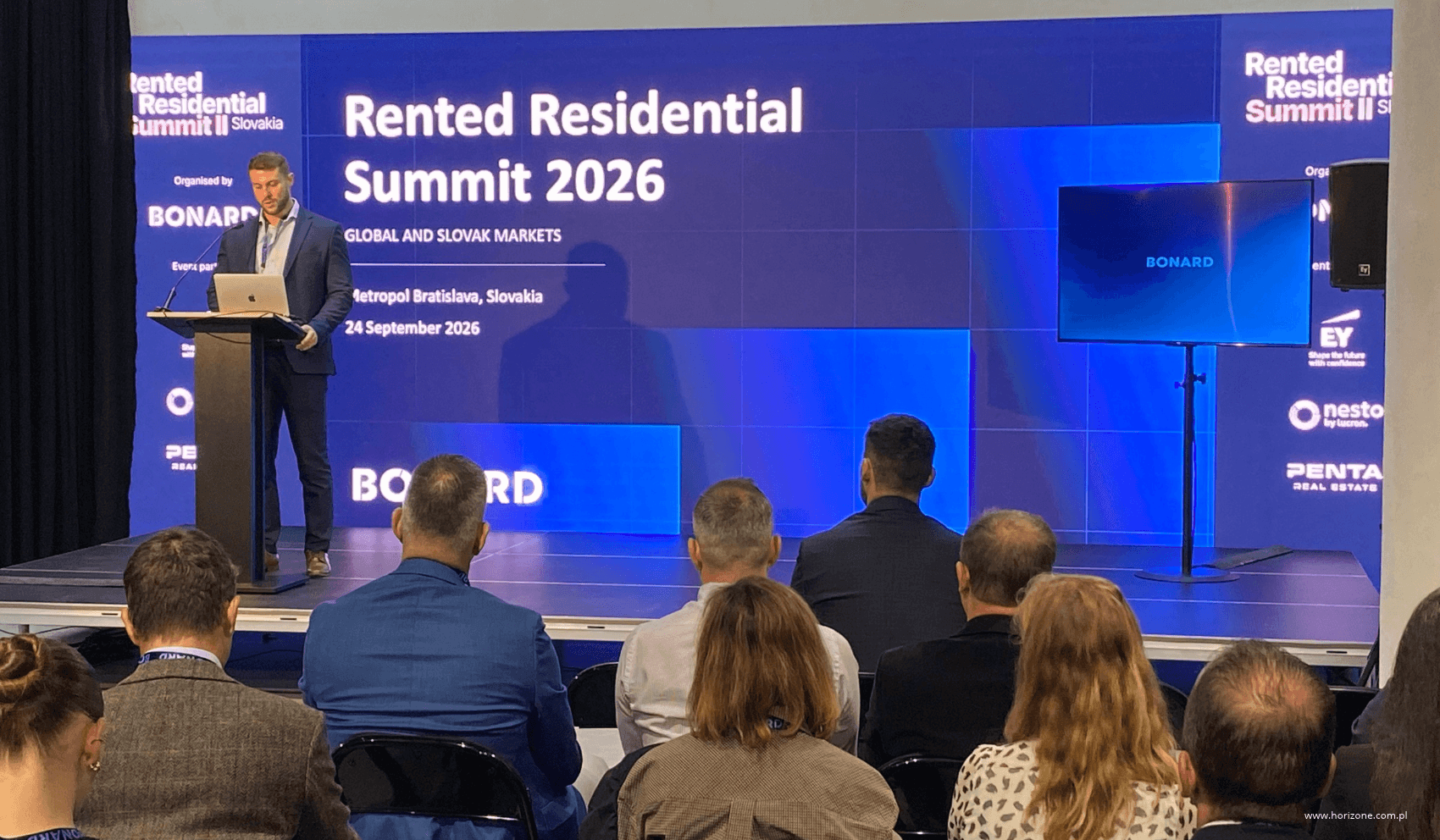
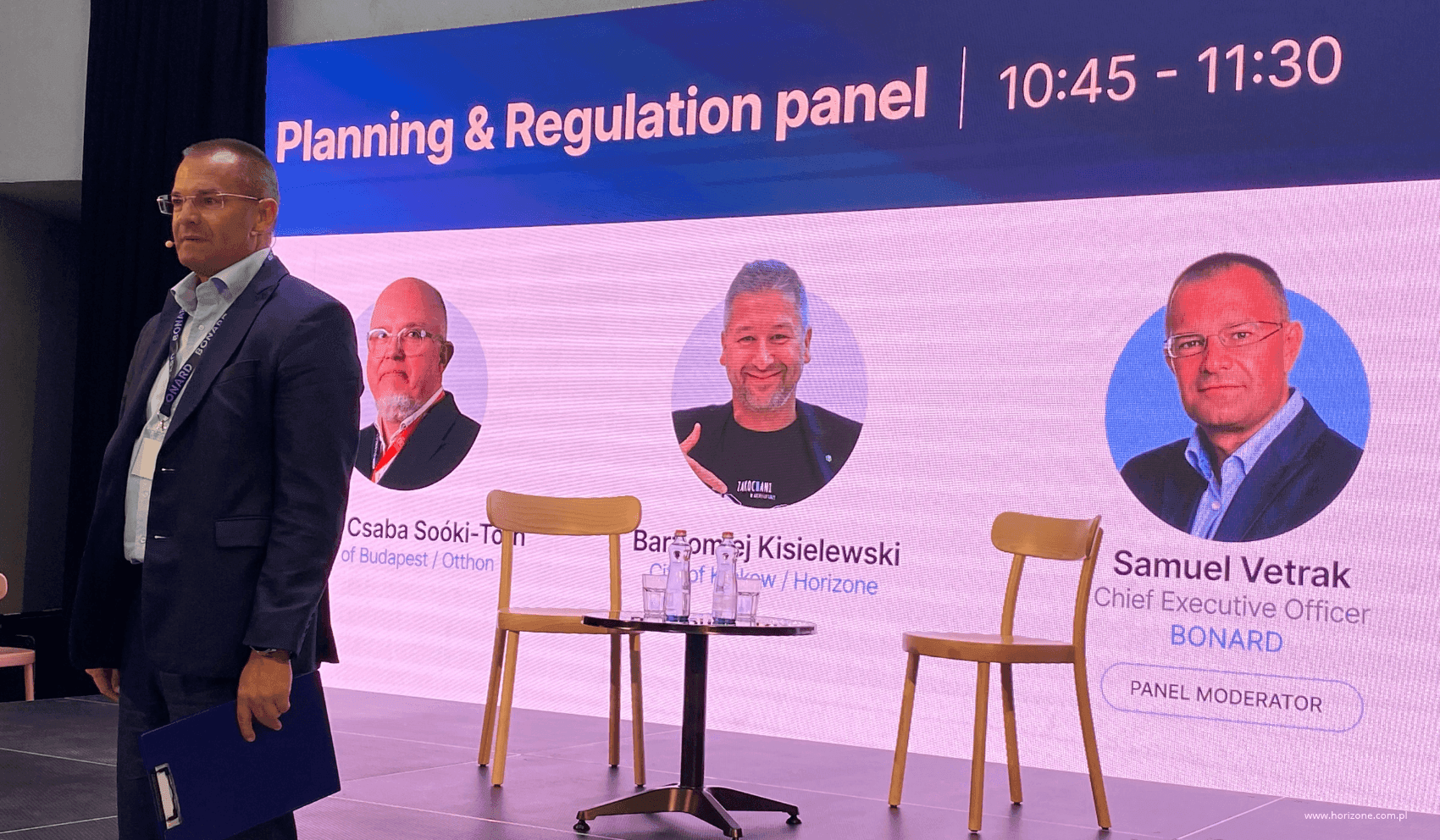
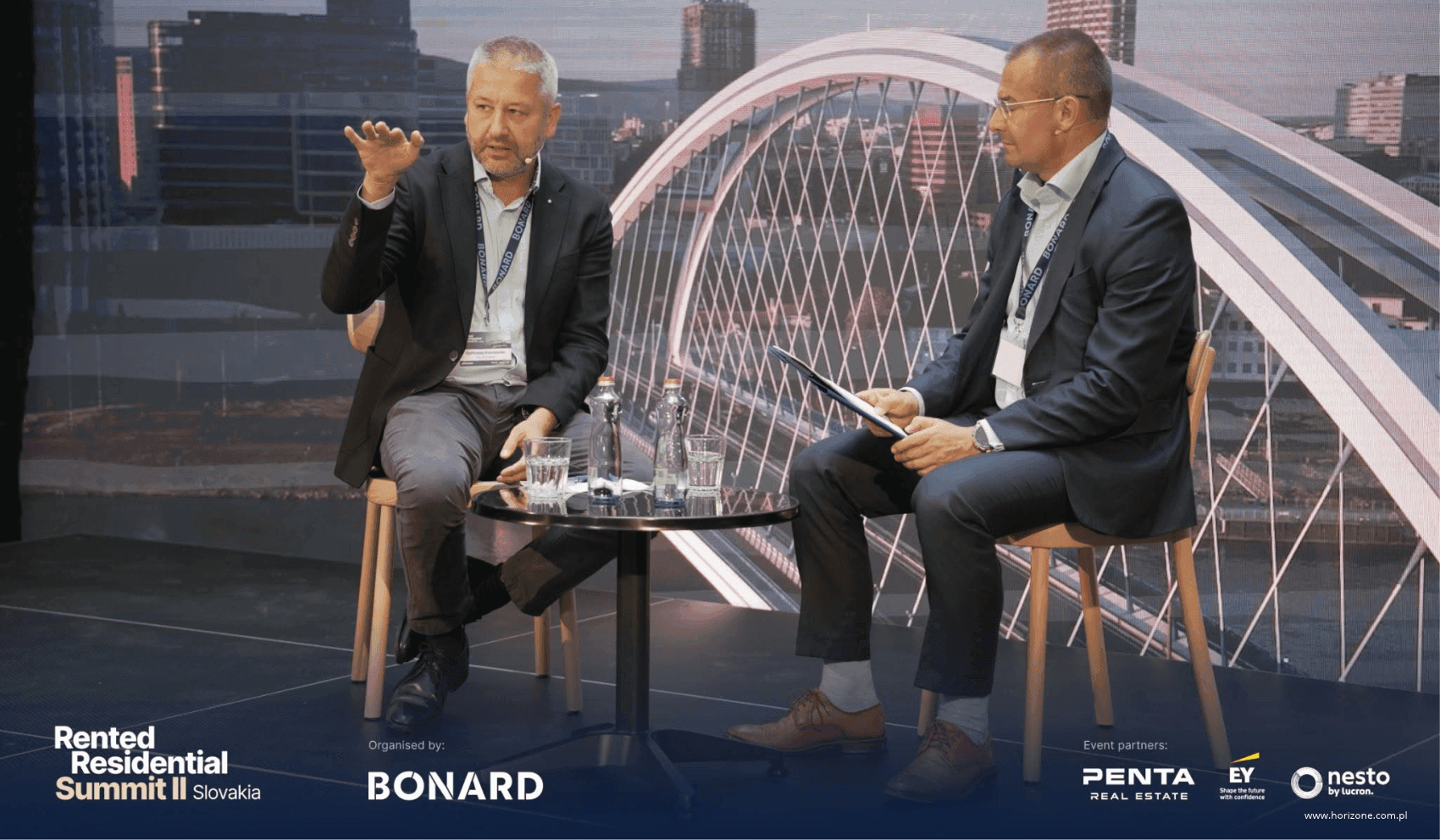
On September 24, 2026, Bartłomiej Kisielewski, a partner at Horizone Studio, took part in the Rented Residential Summit II Slovakia 2026 in Bratislava, an event dedicated to the development of the professional rental market and the “living” sector in Central and Eastern Europe. During the “Planning & Regulations” panel, experts in urban planning, spatial development, and the real estate market discussed how CEE cities can translate housing strategies into tangible investments, as well as which regulatory and planning barriers currently have the greatest impact on the development of new housing supply. In the discussion, Bartłomiej Kisielewski presented the perspective of Poland and Kraków, sharing insights gained from spatial planning, urban development, and the preparation of residential projects.
From housing strategy to project implementation
One of the panel’s key topics was the growth of the PRS (Private Rented Sector), build-to-rent, private student housing, and other forms of institutional housing. In Central and Eastern Europe, this remains a relatively young market segment, yet its importance is rising alongside the demand for accessible and flexible living arrangements, particularly in major cities and among younger residents. The discussion also highlighted the critical importance of factors that must be identified before the actual design process begins, such as the property’s planning status, local regulations, the duration of administrative procedures, the potential for repurposing existing structures, and the dialogue between the investor and local authorities.
Given high land prices and lengthy administrative processes, the conversion of underutilized commercial and office buildings into residential properties is becoming increasingly significant. Such projects can provide a vital source of new housing supply, though they require careful preparation regarding urban planning, functionality, and regulatory compliance.
From an investor’s perspective, the question is not merely about what and how much can be built, but also how to structure a project so that it is procedurally feasible, meets market demands, and simultaneously creates value for the city and its residents.
A thorough analysis of the property and its specific conditions at an early stage helps mitigate risk, refine the investment program, and guide design decisions based on the site’s actual potential.
Bartłomiej Kisielewski’s participation in the Rented Residential Summit II Slovakia 2026 provided an opportunity to share insights from Poland and Kraków within an international forum and to exchange knowledge with experts specializing in residential development across Central and Eastern Europe.
The panel also featured Gábor Csaba Soóki-Tóth MRICS, an expert in urban development and planning and a member of the RICS Advisory Board in Hungary, and was moderated by Samuel Vetrak from BONARD.